
Backyard Phenology is a participatory art and science project for people to share stories and forge new connections to place.
The project fosters conversations about the ecosystems we inhabit; and how we understand those ecosystems through art, science, and culture. Dip into these conversations by browsing documentation on select Backyard Phenology events and exhibits.


Backyard Phenology at Regis Center for Art
SEPTEMBER 12-DECEMBER 9, 2023 | Regis Center for Art, Minneapolis, MN
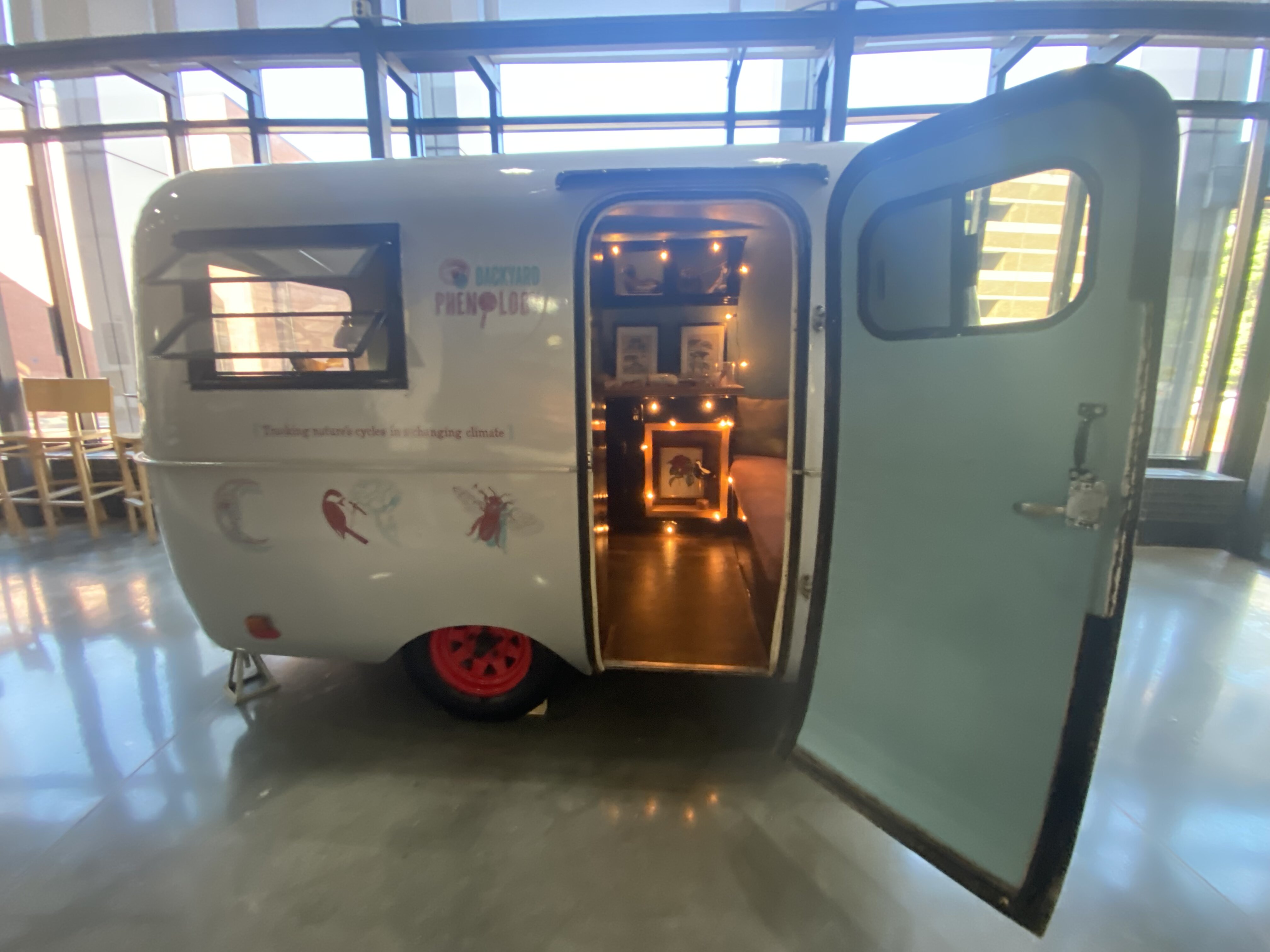
Backyard Phenology and their Climate Chaser were featured in a large faculty and anniversary exhibition at the Regis Center for Art.
The Backyard Phenology team welcomed new audiences into a refurbished and enhanced Climate Chaser, installed within the gallery space. New features included sound design by Brian Heller and upholstery by Olli Johnson using fabrics designed by Steve Premo.
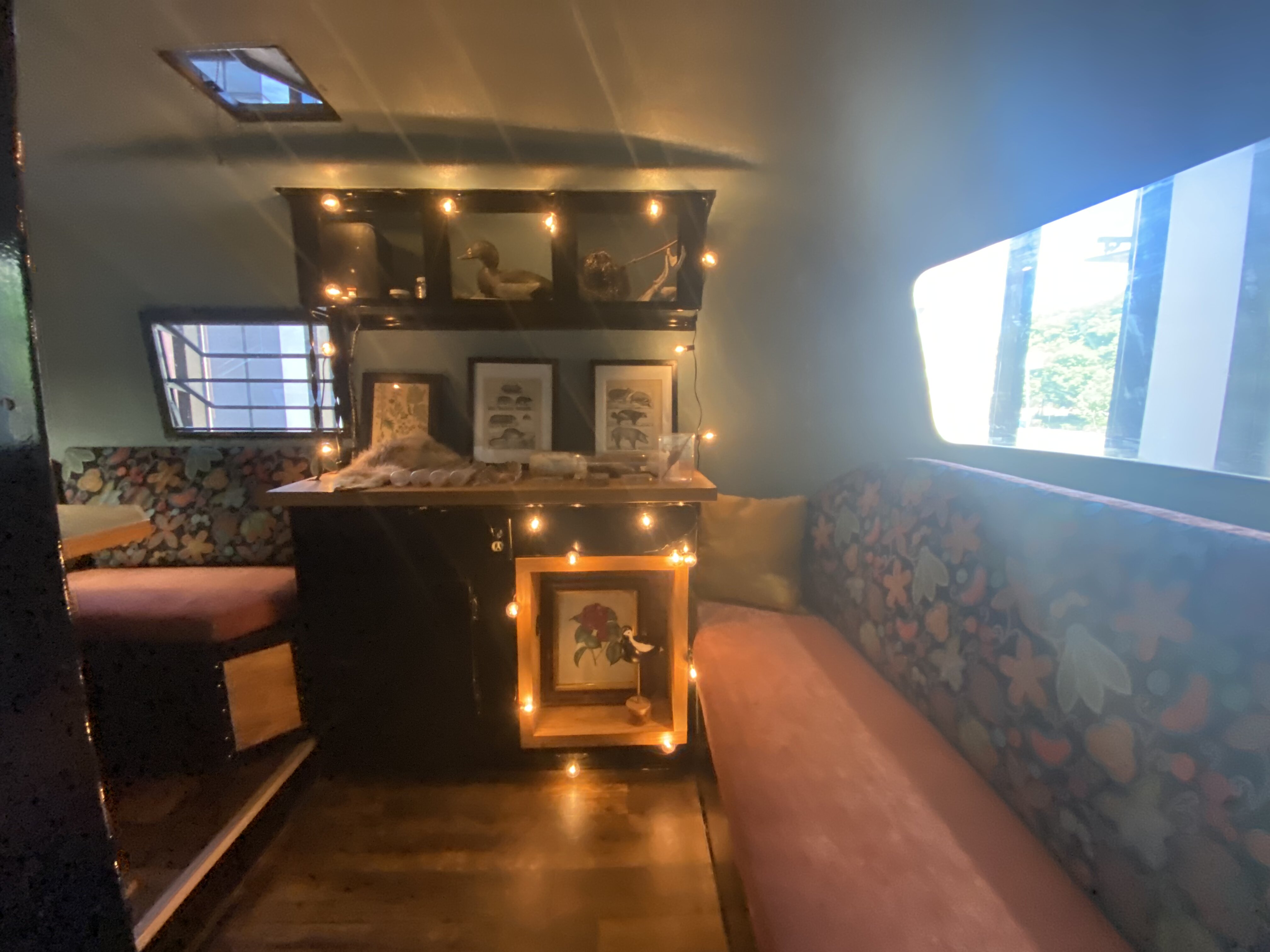
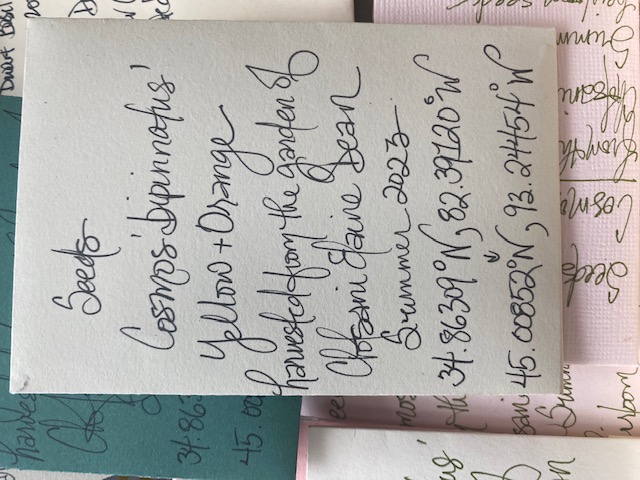
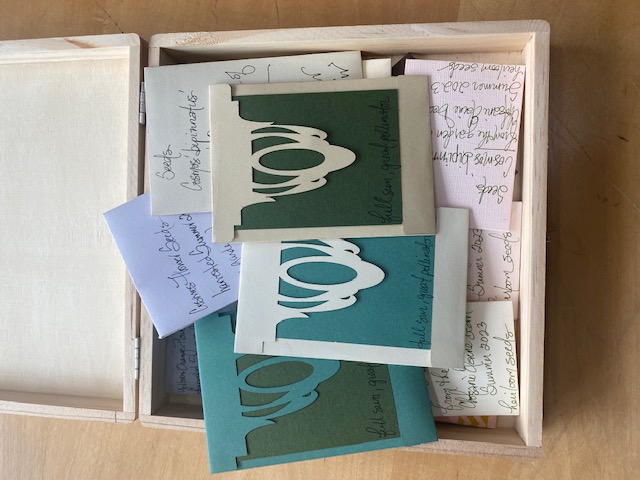
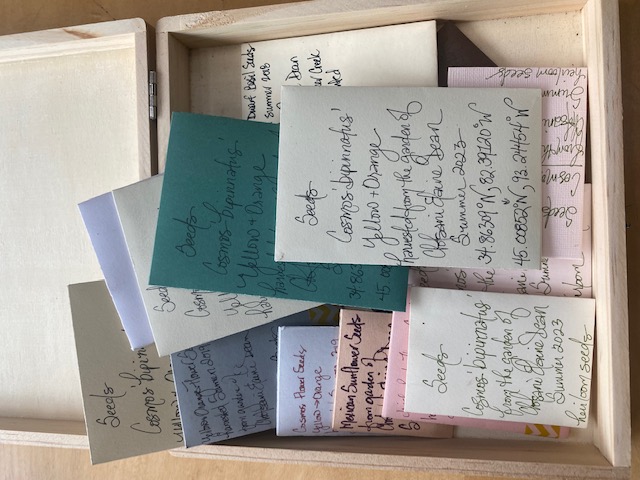
Visitors to the Climate Chaser were welcome to interact with art by Chotsani Elaine Dean, set out on the table inside this cozy space. Gently open the lidded box and carefully flip through an archive of plant seeds in paper packets, each with a handwritten catalogue of its contents.


Backyard Phenology contributor Maria Park foraged for plant materials to make her own paints and then created these handmade invitations for guests.

Maria's hand-penned invitations read:
Dear ____,
We welcome you to join a community meal + conversation. Please reflect on the prompt below. We look forward to listening + sharing stories!
With gratitude, The Pesky Plants & Backyard Phenology Teams
Share a story about an experience that revealed an insight to you about relationships to plants. It could be a story of success, missteps or rupture. In your story, consider how you are framing, reframing or troubling the ideas of native and invasive.
Reflection Space

A brilliantly colored table setting featured bounty from local farmers markets. A bouquet of zinnias took center stage, framed on either side with bell jars displaying live mushrooms. An eclectic mix of tablecloths and china lent texture and beauty to the scene.
Christian Bell created a score to structure the event and guide participation in an intentional way. After everyone arrived, we began by stating our reasons to gather:
- To share community
- To share conversations, food, and feeling
- To reframe our relations with our non-human kin
- To gather a collective understanding of our relation with the land we inhabit, and how we can steward well our local ecosystems

Prior to the event, Maria Park prepared a refreshing, seasonal sumac beverage. The fruits of the sumac plant ripen in late summer and early autumn, at about the same time their leaves turn red.
Sumac fruits form in clusters of fuzzy red globes, about the size of a peppercorn. Sumac has a tangy, slightly sour flavor that can be added to foods and drinks. Maria rinsed the fruits, steeped them in hot water, strained the liquid to remove unwanted plant fragments, and finally added sugar and lemonade to taste.

Participants enjoyed a menu that included
- Salads with homemade vinaigrette
- Carrots glazed with hand-tapped and homemade maple syrup
- Locally caught and homemade crayfish cakes with parsnip purée
- Butternut squash soup
- Homemade bread with local flaxseed

Everyone took turns responding to a prompt provided by artist Christian Bell.
Share a story about an experience that revealed an insight to you about relationships to plants: could be a story of success, misstep, or rupture. In your story, consider how you're framing, reframing, or troubling the ideas of native and invasive.
Trust that as human beings we are all storytellers. The point is not to tell a "good" story, but to relate an authentic experience.
Stories focus on experience or direct observation. They generally include a beginning (context); middle (conflict); and end (insight or question). There are characters and details. But they should not be written out or over-prepared.

A dessert featured serviceberries, foraged near the University of Minnesota campus and baked into a pie. A dollop of ice cream and a drizzle of spruce tips syrup made the meal complete.

Dessert was followed by discussion of insights that were particularly surprising or salient. After the conversation quieted, participants walked into the field for a final reflection activity.
People wrote their reflections on small pieces of paper and tied them to a small maple tree using twine.

A sampling of these messages read:
- Taking personal responsibility for the plants I choose to harvest or cultivate
- Visibility and power of sharing stories of lived experience
- Labor is essential, fatigue is inevitable, but no reason to give up, because community requires and regenerates both of these resources
- Respectful coexistence - everything has a place and makes a contribution, we are all related
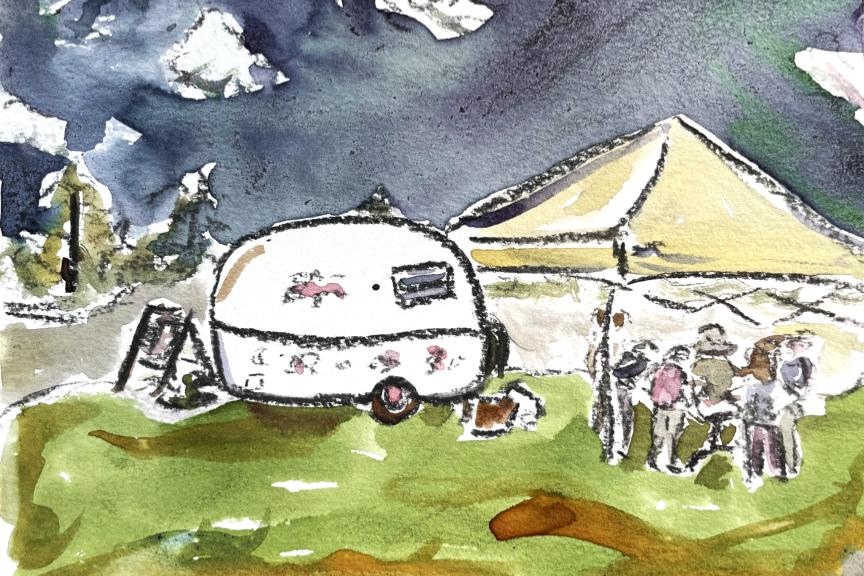
Backyard Phenology presented a day of participatory activities that wove together ecology, land stewardship, and the arts. The day's activities were the collaborative work of artists, scientists, students, naturalists, public historians, sculpture park staff, and the public.

A mini recording studio inside the Climate Chaser welcomed visitors who stepped inside. Storytelling around the table touched on themes of environmental change, climate concerns, and the many ways people turn their attention to the natural world.

Artist Kim Boustead invited the public to explore a variety of hand-made inks she prepared using plant pigments. Guests investigated the hands-on samples of pigment sources, manipulated inks by adding acidic and basic solutions, and created original works of art to take home.

BioQuest was a playful program that encouraged visitors to pay attention to the plants and animals living amid Franconia’s sculptures. Guests of all ages used their smartphones to photograph plants, insects, birds, mammals, fungi, and other living beings. iNaturalist was used as a simple way to generate a collaborative map of Franconia’s biodiversity.
BioQuest observations, available on the project page, will inform artists, scientists, and visitors who want to learn more about Franconia’s ecology.
BioQuest's activities also included artist-led nature walks, as well as a conversation station where people browsed natural history objects, coloring pages, and field guides.